About
SERVIR HKH, with the technical support of Brigham Young University (BYU), developed three products as part of Enhancing Flood Early Warning service.
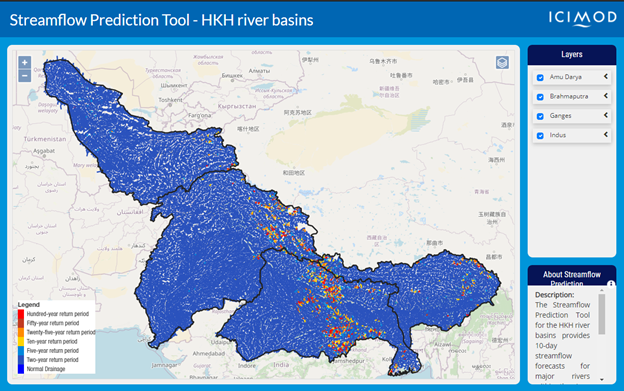
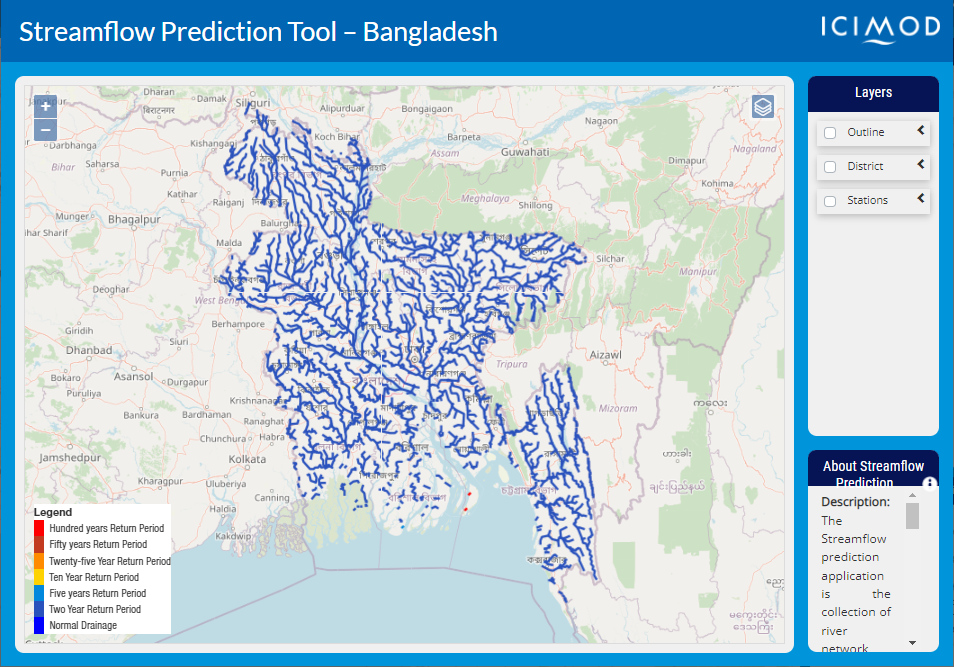
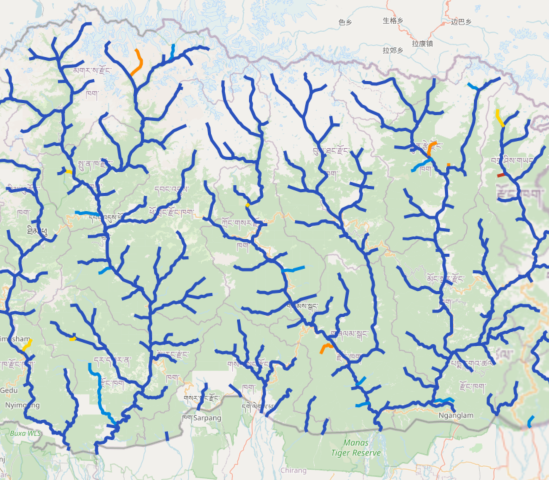
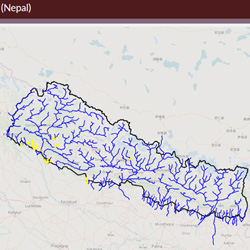
Streamflow Prediction Tools (SPT) for riverine flood early warning: The service developed a Streamflow Prediction Tool (SPT) based on the European Centre for Medium-Range Weather Forecasts (ECMWF) ensemble forecasting. The system incorporates all primary and secondary rivers in the HKH region. The system provides user-friendly access to 10-day forecasts of streamflow. Based on the regional system, a customized SPT web interface was developed to meet the needs of respective users in Nepal, Bhutan, and Bangladesh.
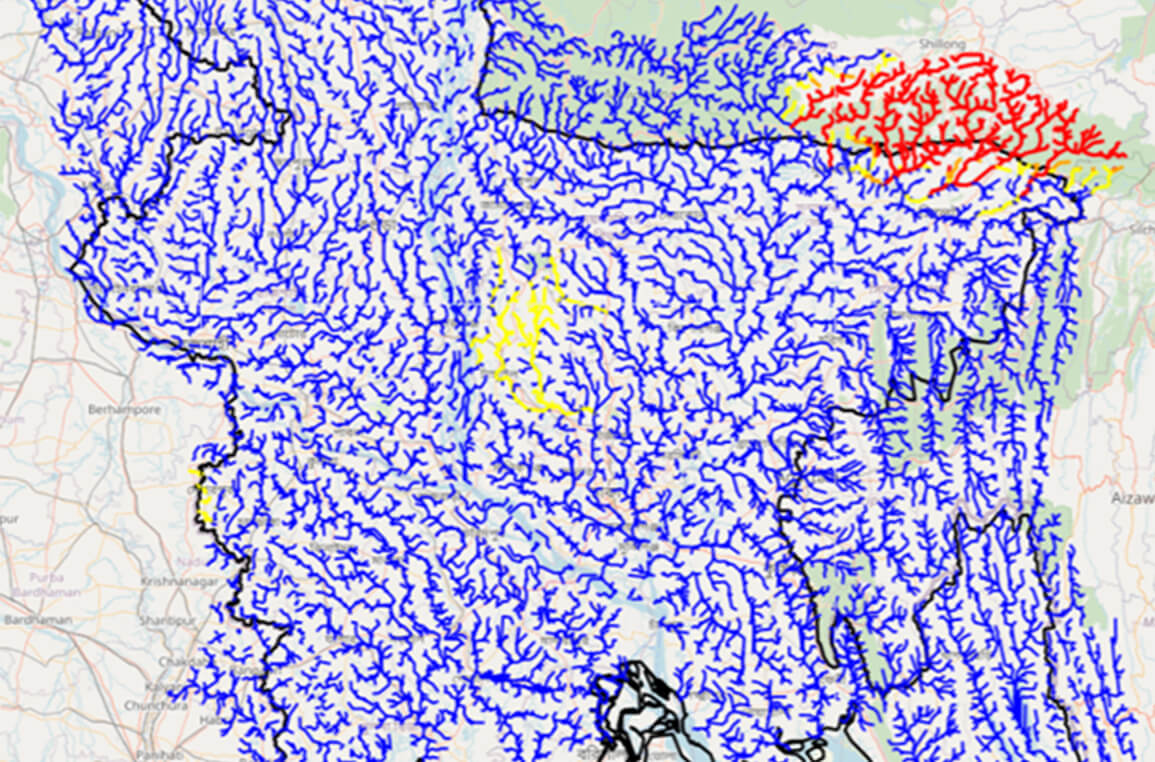
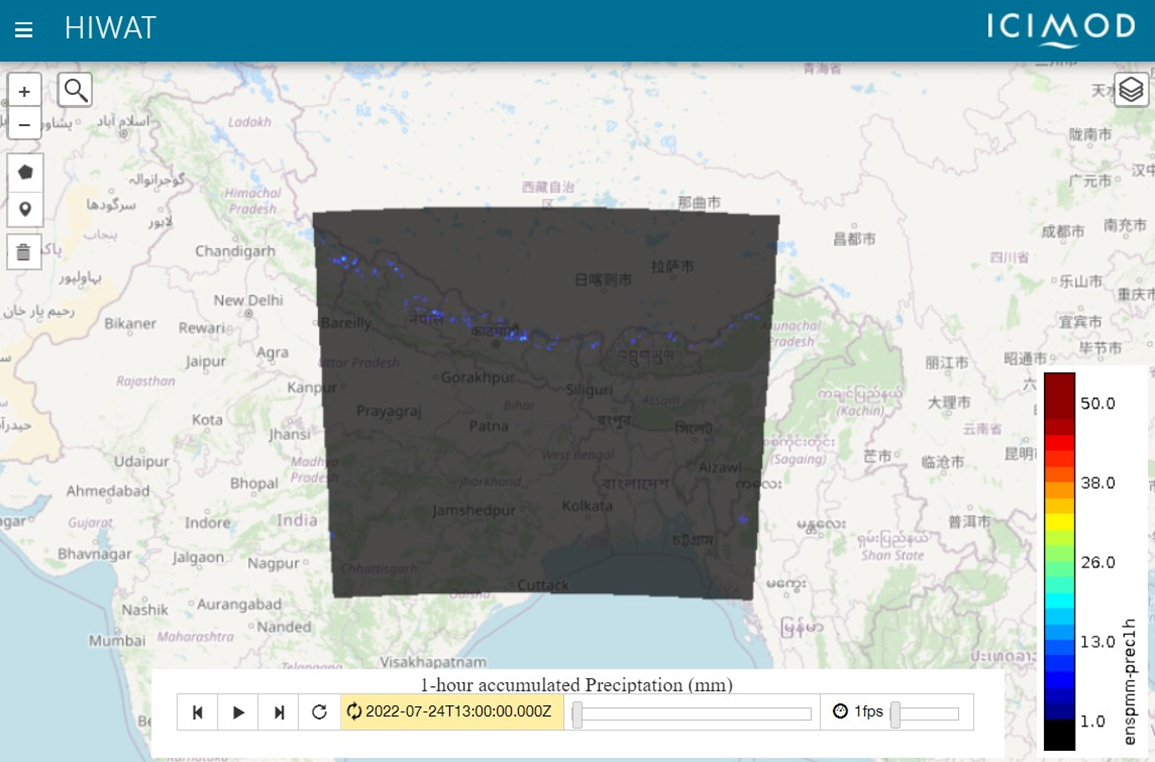
Flash Flood Prediction Tools (FFPT) for smaller rivers: Using the precipitation forecast from the High-Impact Weather Assessment Toolkit (HIWAT), a streamflow forecasting system was developed to support flash flood early warning in small local rivers in Bangladesh and Nepal. This system provides a lead time of 54 hours.
Meghna River Basin Flash Flood Tool: A mobile application, “Prakop Alert” was recently launched at Playstore which provides flash flood prediction information at the community level. With the request from Flood Forecasting & Warning Centre (FFWC) in Bangladesh, a customized flash flood prediction model using the HIWAT data was developed for the Meghna River Basin using the J2000 hydrological model.
Rationale
Early warning is one of the critical elements for building the resilience of vulnerable communities against flooding. Early warning systems (EWS) are often deficient in delivering actionable information in both lead time and content. Existing in situ station-based flood EWS are challenged by short lead times and being hazard-based early warning leading to inadequate response times and insufficient information about the scale of potential impact. In Bangladesh, the hydrological models for flood early warning suffer from a lack of upstream data, making it difficult to increase lead time of flood forecasting downstream. In Nepal, flood forecasting for smaller rivers is a challenge due to its geography and lack of in situ data. Longer lead times and access to critical information ensures improved preparedness for responders, in turn, saving more lives and property. Disseminating warning information and giving communities timely access, is also important to get a maximum return from investing in early warning services.